1st generation of Computer:
From 1940-1956
Basic technology used was Vacuum tube.
Famous names of the computers of first generation computers are MARK-1, UNIVAC, ENIAC.
Images of ENIAC
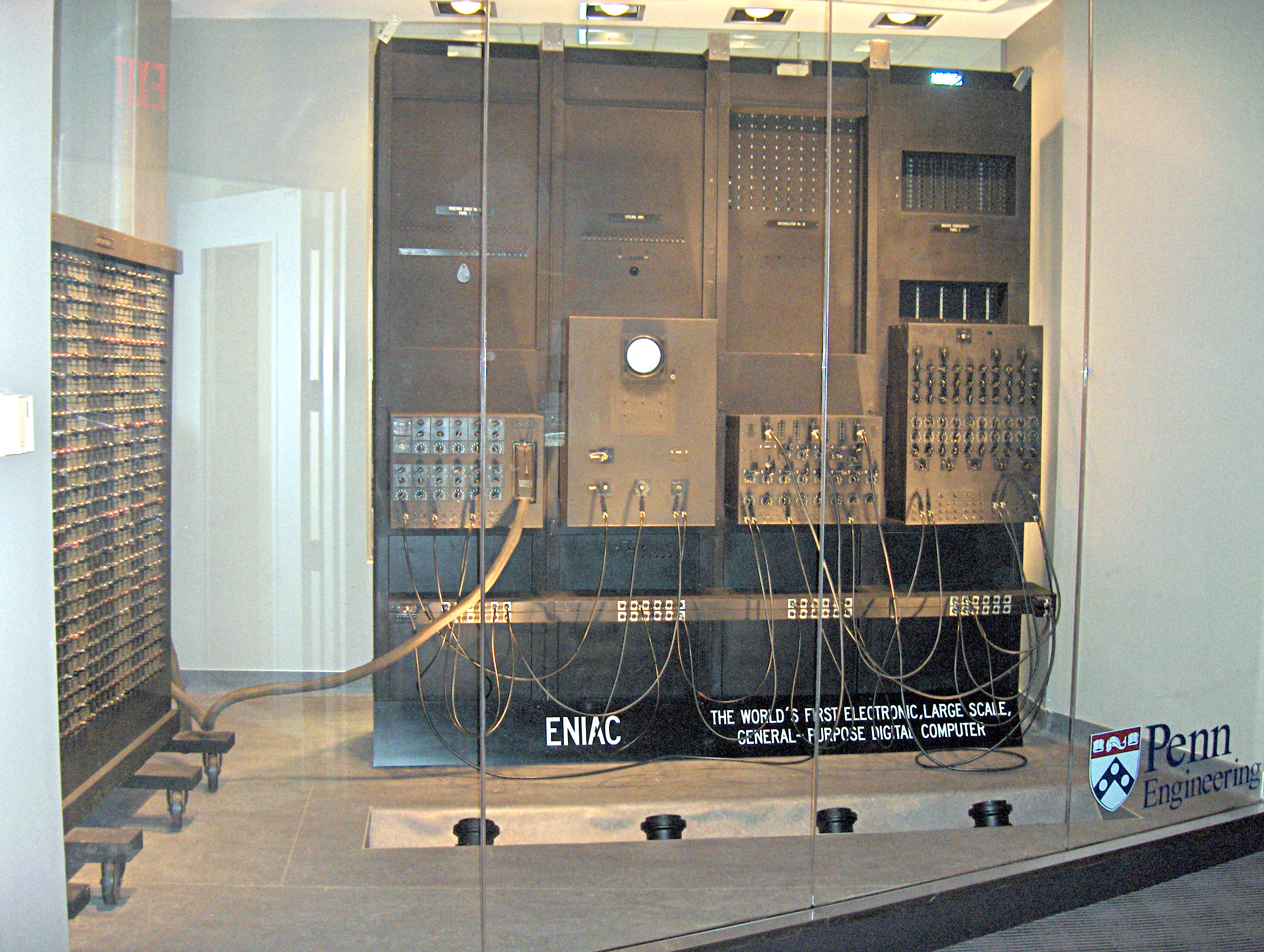
First Generation computers are characterised by the use of vacuum tubes. These vacuum tubes were used for calculation as well as storage and control. Later, magnetic tapes and magnetic drums were implemented as storage media. The first vacuum tube computer, ENIAC, was developed by US army ordinance to calculate ballistic firing tables in WWII. It had about 17 000 vacuum tubes. The machine weighed 30 tons, covered about 1000 square feet of floor, and consumed 130 or 140 kilowatts of electricity. The ENIAC's clock speed was about 100 kHz. In addition to ballistics, the ENIAC's field of application included weather prediction, atomic-energy calculations, cosmic-ray studies, thermal ignition, random-number studies, wind-tunnel design, and other scientific uses. No electronic computers were being applied to commercial problems until about 1951.
Vacuum tube circuit
 This is an example of a vacuum tube based circuit used in a first generation computer (a Burroughs), pictured here next to a transistor based circuit, with similar functionality, from a second generation computer (the IBM 1620). The vacuum tubes (at the top of the circuit) have been damaged because of overheating. We suspect that this particular circuit is a 4-bit register. Circuits created i this way were extremely bulky. To create a 32-bit ADD circuit would require 800 logic gates using a total of 1,504 transistors. In vacuum tube based computers, this many vacuum tubes would take up a space about the size of a refrigerator.
Images of MARK 1
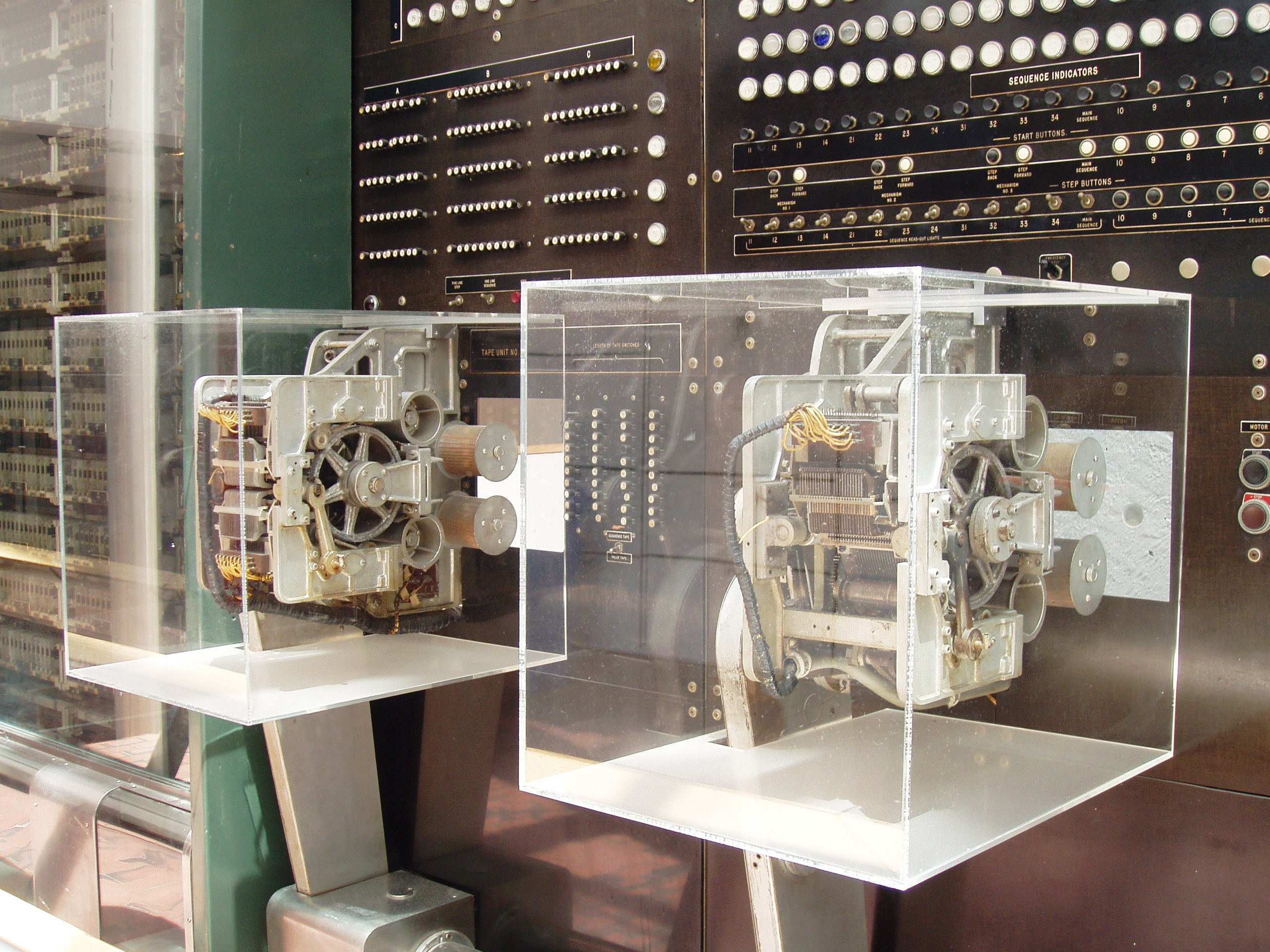
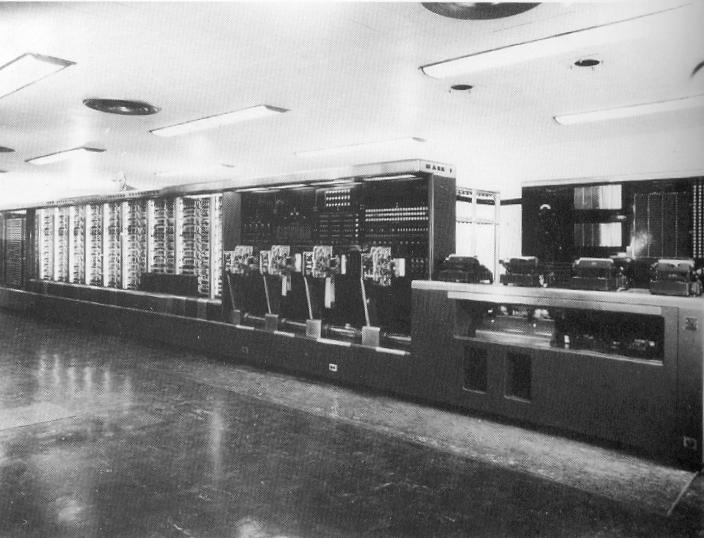
About MARK-1
The IBM Automatic Sequence Controlled Calculator (ASCC), called Mark I by Harvard University’s staff,[1] was a general purpose electro-mechanical computer that was used in the war effort during the last part of World War II.
The original concept was presented to IBM by Howard Aiken in November 1937.[2] After a feasibility study by IBM’s engineers,Thomas Watson Sr. personally approved the project and its funding in February 1939.
Howard Aiken had started to look for a company to design and build his calculator in early 1937. After two rejections,[3] he was shown a demonstration set that Charles Babbage’s son had given to Harvard university 50 years earlier. This led him to study Babbage and to add references of the analytical engine to his proposal ; the resulting machine “brought Babbage’s principles of the analytical engine almost to full realization, while adding important new features.”[4]
The ASCC was developed and built by IBM at their Endicott plant and shipped to Harvard in February 1944. It began computations for the U.S. Navy Bureau of Ships in May and was officially presented to the university on August 7, 1944.
One of the first programs to run on the Mark I was initiated on 29 March 1944[5] by John von Neumann, who worked on the Manhattan project at the time, and needed to determine whether implosion was a viable choice to detonate the atomic bomb that would be used a year later. The Mark I also computed and printed mathematical tables, which was Charles Babbage’s initial goal for his analytical engine.
The Mark I was officially retired, after 15 years of service, in 1959.


